
1. Opening: why you need this
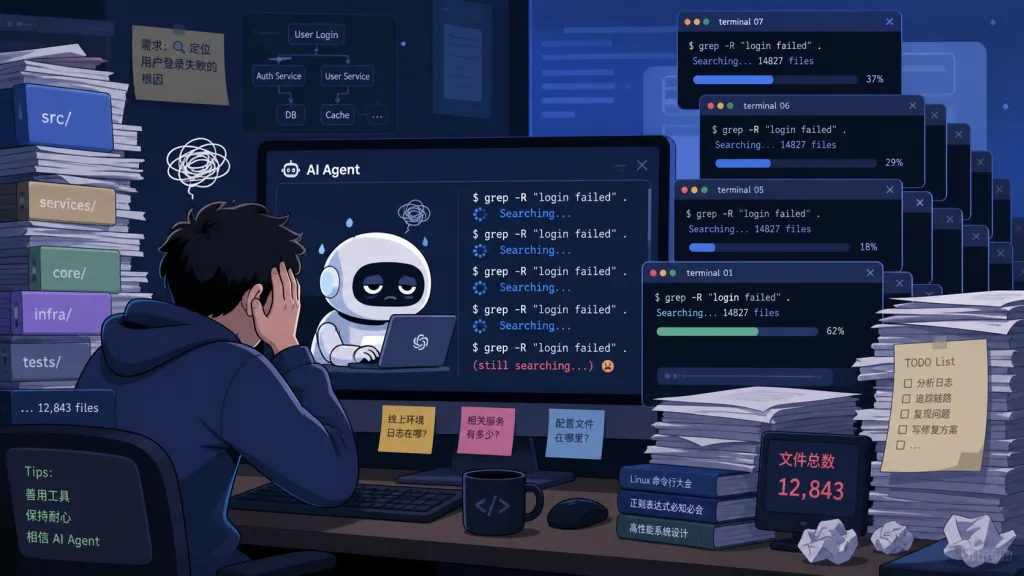
AI coding assistants have found their way into most developers' workflows, but have you been tortured by this scene: you ask an agent to walk you through an unfamiliar project, it starts grepping and reading and flipping through files, and after five queries the context window is stuffed with a few hundred thousand tokens — and the answers are still frequently off-target. File-level retrieval is both its eyes and its ceiling. Against the Linux kernel's 28M lines across 75K files, traditional approaches collapse outright: tens of minutes with no result. This is the long-standing gap in structured code intelligence — AI can see characters, but not architecture.
2. What the project is, in one sentence
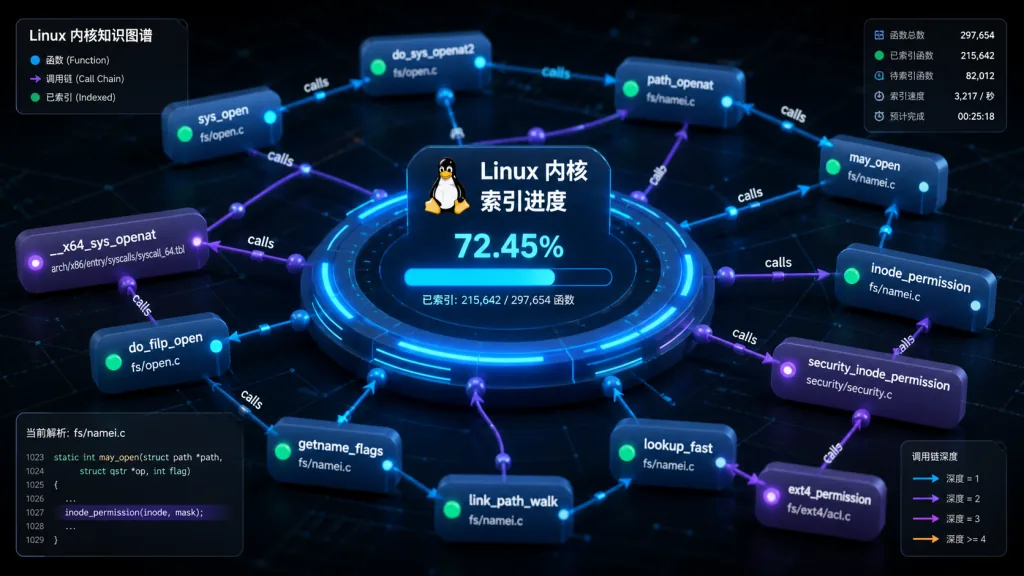
codebase-memory-mcp is a high-performance code intelligence MCP server built for AI coding agents. It uses tree-sitter to parse a codebase into a persistable knowledge graph: milliseconds to index an average repo, three minutes to ingest the entire Linux kernel, sub-1ms query responses. A single static binary with zero dependencies, 158 languages, and 43 agent clients supported out of the box. It has 38638 stars on GitHub, 15 MCP tools, and 6768 test cases keeping watch.

3. A deep dive into the core features
1. Blazing-fast indexing and sub-millisecond queries
A RAM-first pipeline is built in: LZ4-compressed reads, in-memory SQLite, combined Aho-Corasick multi-pattern scanning, then a single write to disk followed by memory release. The Linux kernel — 28M LOC, 75K files — finishes in three minutes, producing 4.81 million nodes and 7.72 million edges; regex name search <10ms, Cypher relationship traversal <1ms, call-chain tracing (depth 5) still <10ms. This architecture compresses "build the whole graph" from hours to minutes.
2. Hybrid LSP semantic type resolution
Ordinary AST tools can only tell you "who called what" — they can't even distinguish which overload was called. codebase-memory-mcp embeds lightweight LSP algorithms for 10 languages: argument binding, return type inference, generic substitution, JSX component dispatch, PHP namespaces + traits + late static binding, C# file-scoped namespaces + records + LINQ, Java class hierarchies + overloads + lambdas, Kotlin extension functions, Rust traits + UFCS. Structurally it stays compatible with tsserver, pyright, gopls, Roslyn, JDT and rust-analyzer, so call edges in Python, TS/JS/JSX/TSX, PHP, C#, Go, C, C++, Java, Kotlin, Rust and Perl are almost never miswired.
3. Cross-service tracing and infrastructure-as-code mapping
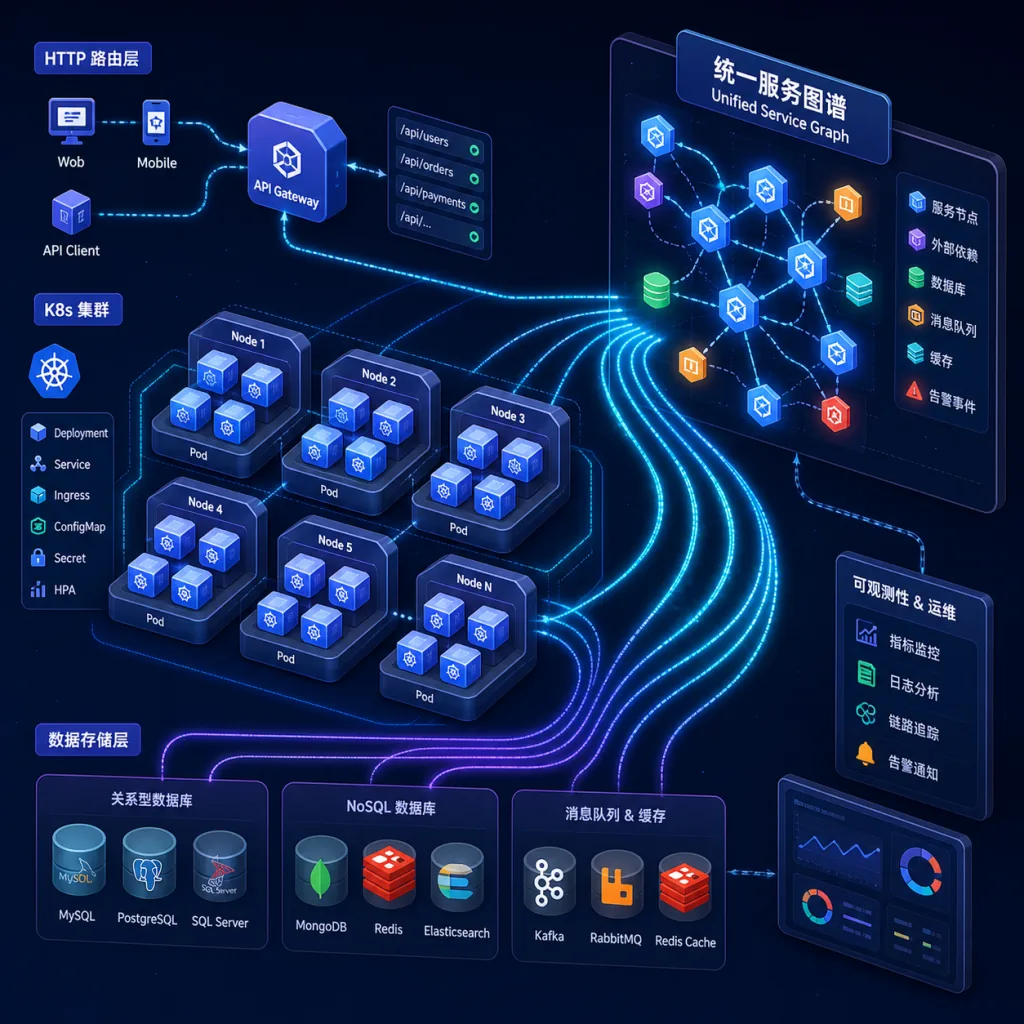
REST/gRPC/GraphQL/tRPC routes are extracted automatically from manifests into reference edges, with HTTP routes and call sites matched by confidence; Socket.IO, EventEmitter and Pub-Sub emit EMITS / LISTENS_ON edges across 8 languages. Dockerfiles, Kubernetes manifests and Kustomize overlays all land in the graph: K8s resources become Resource nodes, Kustomize overlays become Module nodes wired together with IMPORTS edges — monorepos and microservice fleets alike can see their boundaries in a single graph.
4. Graph snapshots shared across the team
.codebase-memory/graph.db.zst is a zstd-compressed SQLite snapshot of the knowledge graph: a new member clones the repo, and the first run decompresses it and indexes only local deltas, skipping a full rebuild. The Best profile uses zstd -9 + index stripping + VACUUM INTO; the Fast profile uses zstd -3 for low-latency incremental writes from the watcher. The first export also writes merge=ours into .gitattributes, so the binary artifact stops producing annoying merge conflicts.
4. Technical highlights and performance numbers
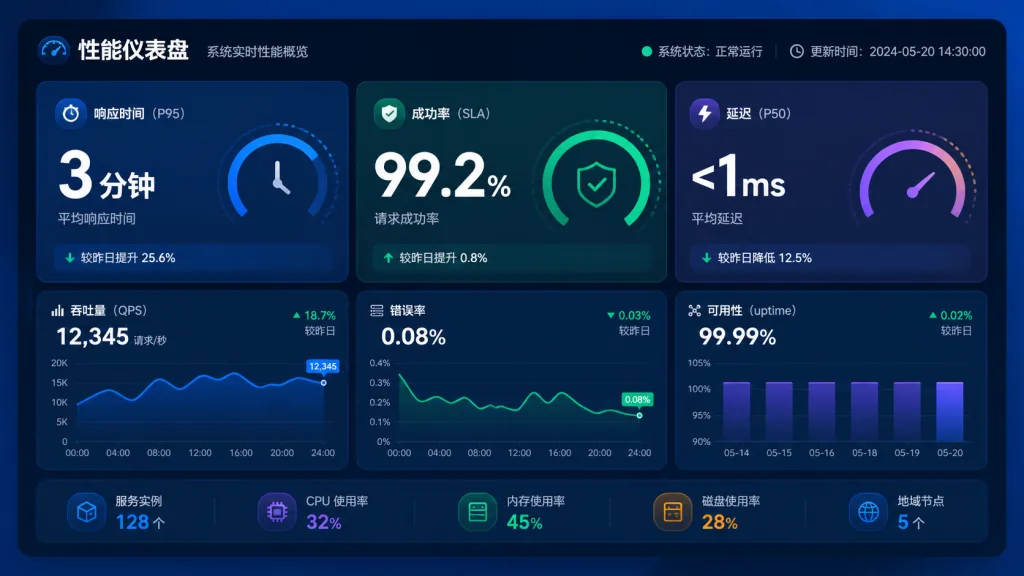
- Hard numbers: milliseconds to index an average repo; three minutes for the whole Linux kernel; Cypher queries <1ms; five structured queries cost about 3400 tokens versus 412000 for file-by-file retrieval, a 99.2% reduction; the study reports 83% answer quality, calls down to 2.1× and tokens down to 10× (arXiv:2603.27277).
- Architecture highlights: pure C implementation with 158 tree-sitter grammars vendored into the binary; the local embedding model
nomic-embed-code(40K tokens, 768d int8) is compiled in too — no Ollama, no Docker, no API key. - Ecosystem compatibility: macOS (arm64/amd64), Linux (arm64/amd64), Windows (amd64); distributed everywhere via npm, PyPI, Homebrew, Scoop, Winget, Chocolatey, AUR and
go install; OpenSSF Scorecard and SLSA Level 3 supply-chain certification, with every release scanned by VirusTotal.
5. Use cases and who it's for
- Large-codebase explorers: taking over an unfamiliar monorepo or microservice fleet and needing call boundaries, service dependencies and a dead-code list fast.
- Heavy AI coding agent users: anyone who wants Claude Code, Codex, Cursor, Cline and friends to stop burning tokens and losing context in long sessions.
- Architecture governance and compliance: teams that need ADRs, HTTP routes and K8s resources in one graph for impact analysis, change auditing and cross-service tracing.
Who it doesn't fit: light users who only need single-file regex replacements, or who don't use AI agents at all — plain grep is the better deal.
6. How it compares
| Dimension | codebase-memory-mcp | Traditional LSP tools | File-level retrieval agents |
|---|---|---|---|
| Indexing speed | Linux kernel in 3 minutes | Usually 10–30 minutes | No graph at all |
| Language coverage | 158 + 10 Hybrid LSP | Usually 1–3 | Depends on grep |
| Token consumption | 5 queries ≈ 3400 tokens | Depends on implementation | 412000 tokens |
| Deployment | Single binary, zero deps | Needs Node/Python runtimes | Follows the agent |
| Cross-service graph | HTTP/gRPC/GraphQL/tRPC + IaC | Mostly unsupported | Unsupported |
7. Getting started fast
One line installs it — on macOS/Linux:
curl -fsSL https://raw.githubusercontent.com/DeusData/codebase-memory-mcp/main/install.sh | bash
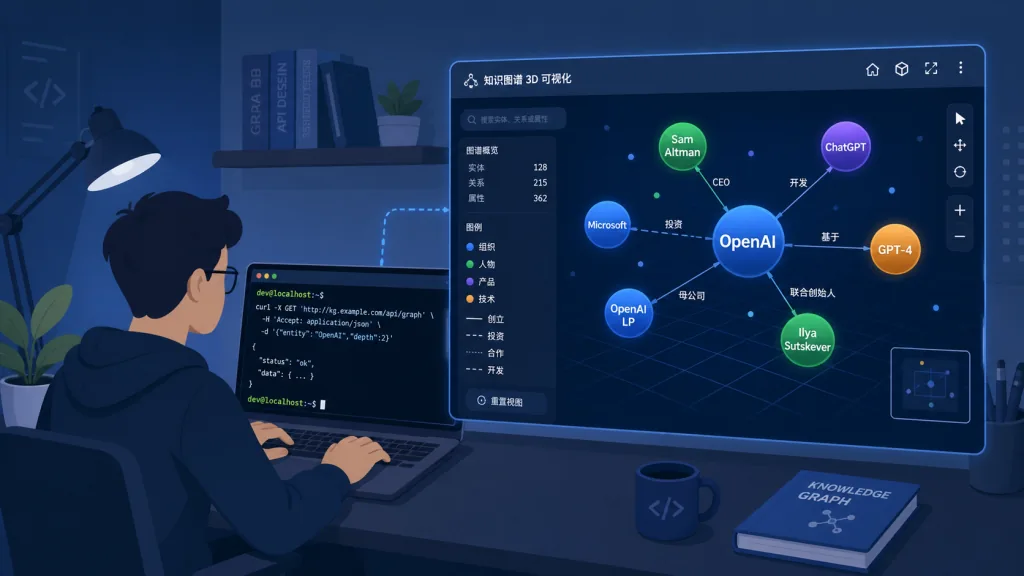
Windows PowerShell users download install.ps1, run Unblock-File first, then execute it. The install script strips macOS quarantine attributes and ad-hoc signs the binary automatically. Once installed, restart Claude Code and tell the agent "Index this project" to build the first graph. For the 3D graph visualization, run codebase-memory-mcp --ui=true --port=9749 and open http://localhost:9749 in a browser to pan and zoom through it. Advanced users should turn on auto_index and auto_watch so new projects build a graph on first connection and later changes update incrementally in the background; to share with a team, commit .codebase-memory/graph.db.zst to the repo.
8. Takeaways and what to do next
codebase-memory-mcp turns a codebase into a knowledge graph that AI can actually understand, freeing agents from the inefficient page-by-page loop. Three minutes to index the Linux kernel, 99% fewer tokens, 43 client types installable out of the box — that combination is close to one of a kind in today's AI coding stack. Install it with the one-line script, pick the project you know best and run Index this project to feel a millisecond-level architecture overview; then commit .codebase-memory/graph.db.zst to your repo so teammates skip the long cold start.
- GitHub: https://github.com/DeusData/codebase-memory-mcp
- Docs: https://deusdata.github.io/codebase-memory-mcp/
- Research paper: https://arxiv.org/abs/2603.27277
One-line recommendation: give AI some structured memory and say goodbye to grep starting today.