
Title options (pick 1 of 3)
Seven open-source picks that keep me from working late — backend, frontend and ops all covered
The 7 open-source projects I use every day, rounded up in one place
Stop reinventing the wheel: these 7 open-source tools deserve a bookmark right now
1. Opening: stop wrestling with it by hand
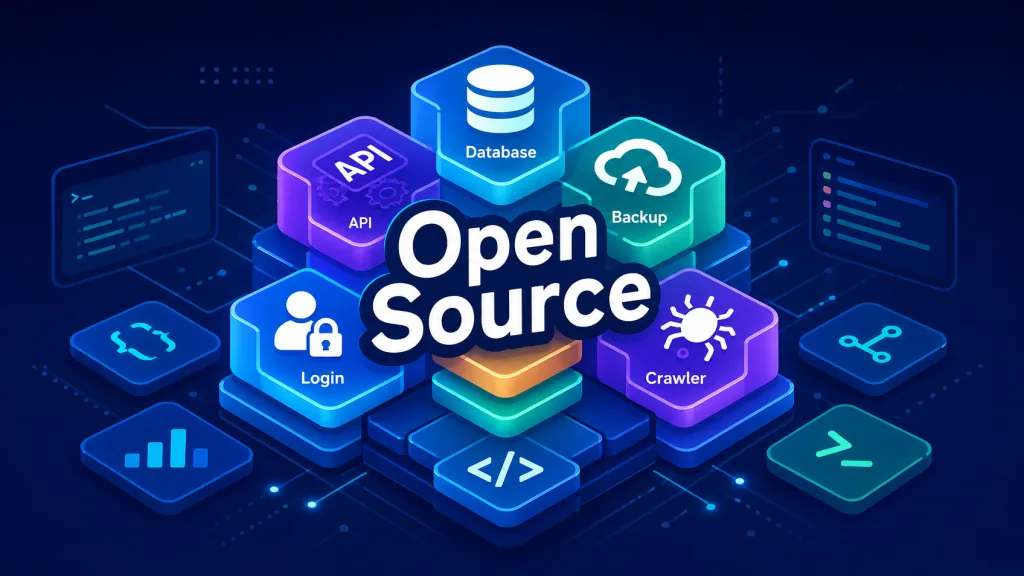
Six p.m. on a Friday. A backend teammate discovers production has no automated backups, so the only option is a manual mysqldump followed by scp to another machine. A frontend colleague wants to add a login system and realizes every new project means rewriting signup, password recovery and OAuth callbacks again. The data team wants to scrape a batch of pages for analysis, and after a whole night of fighting anti-bot measures, JS rendering and proxy rotation, exactly 3 URLs came through. None of these jobs is complicated. But every time, you rebuild the same wheel. The seven projects below are the wheels that make these jobs "configure once, benefit for years".
2. Projects at a glance
| Repo | Stars | Language | One-line positioning |
|---|---|---|---|
| supabase/supabase | 110k+ | TypeScript | A batteries-included full-stack platform on Postgres |
| goauthentik/authentik | 25k+ | Python | A self-hosted identity and SSO hub |
| oceanbase/oceanbase | 10k+ | C++ | China's own native distributed relational database |
| t8y2/dbx | 20k+ | Rust | A 25 MB cross-platform universal database client |
| gobackup/gobackup | 3k+ | Go | A scheduled backup CLI for databases and files |
| firecrawl/firecrawl | 180k+ | TypeScript | Turn any web page into clean, LLM-readable data |
| public-apis/public-apis | 480k+ | Python | A community-maintained directory of free APIs |
3. The projects, one by one
supabase/supabase — one Postgres for the entire backend stack
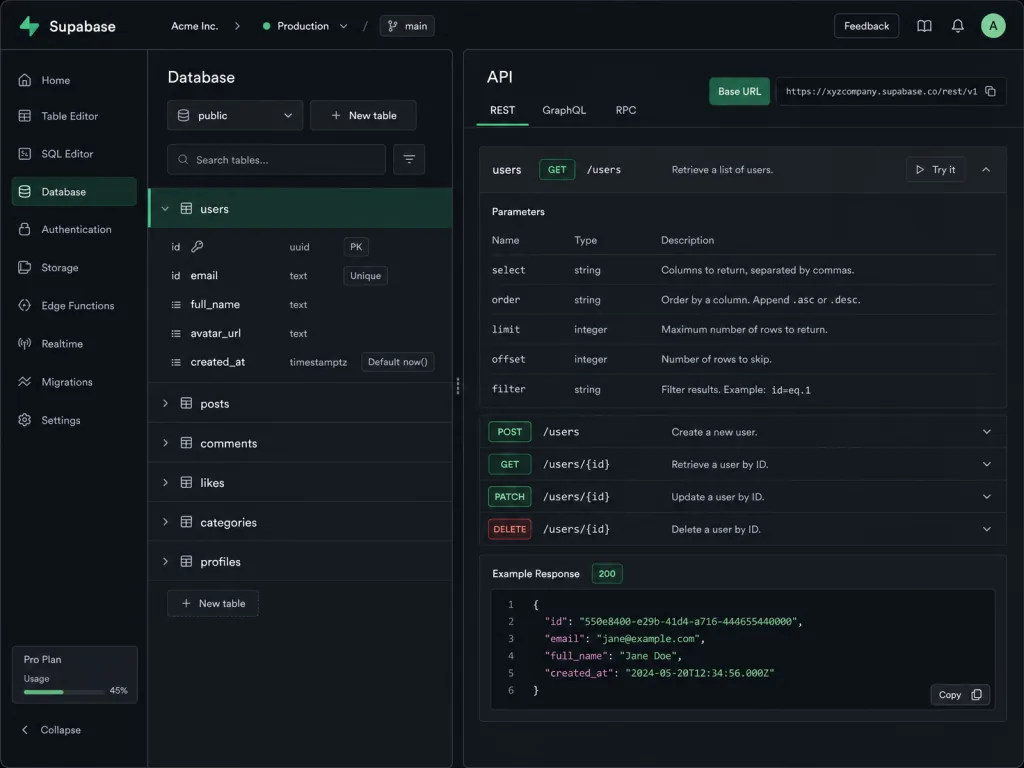
Supabase lets you skip the repetitive work of hand-building a backend and land directly on a production-ready Postgres platform. Hosted Postgres, Auth, auto-generated REST / GraphQL APIs, Realtime subscriptions, file storage, Edge Functions, AI plus vector search — all in the same console. Under the hood it is assembled from open-source pieces such as Postgres, PostgREST, GoTrue, Realtime and Storage-api, so there is no lock-in to worry about.
- Who it's for: individuals or small teams building web / mobile / AI apps from zero; projects that want to replace Firebase without getting tied to it
- Who it's not for: traditional enterprises that already have a dedicated DBA team or hard dependencies on Oracle-specific features
Minimal setup
After signing up you get a URL and an anon key; install the JS client:
npm install @supabase/supabase-js
One line gets you the current session:
const supabase = createClient('https://xxx.supabase.co', 'anon-key')
Source: https://github.com/supabase/supabase
goauthentik/authentik — one IdP for every login you have
authentik is an open-source identity provider for SSO on modern applications, supporting SAML, OAuth2 / OIDC, LDAP and RADIUS. It can serve as a company's single sign-in entry point, and it can also reverse-proxy into existing LDAP / Active Directory. Many teams use it to replace Okta, Auth0 or Entra ID; the enterprise edition adds higher-end compliance and operations features.
- Who it's for: mid-sized and large teams that need unified employee / customer login; companies that want self-hosting so they keep control of user data
- Who it's not for: projects that are just one small internal tool with fewer than 50 login users
Minimal setup
Bring up a minimal instance with Docker Compose:
curl -L https://goauthentik.io/docker-compose.yaml -o docker-compose.yml
Then start it and open :9000 to initialize:
docker compose up -d
Source: https://github.com/goauthentik/authentik
oceanbase/oceanbase — Ant Group's native distributed database
OceanBase is a distributed relational database rewritten from the ground up, scaling a single cluster to 1,500 nodes, PB-scale data and trillions of rows. It measured 707 million tpmC on TPC-C and 15.26 million QphH on TPC-H at 30000GB; it is also MySQL-protocol compatible, so migrating off a standalone MySQL costs close to nothing. With RPO = 0 and RTO < 8 seconds for failure recovery, it has been running in financial-grade scenarios for years.
- Who it's for: businesses with large, continuously growing data that care about high availability and cost; hard requirements on MySQL compatibility
- Who it's not for: small projects with modest QPS and GB-level data
Minimal setup
The easiest way to try it is the official all-in-one:
bash -c "$(curl -s https://obbusiness-private.oss-cn-shanghai.aliyuncs.com/download-center/opensource/oceanbase-all-in-one/installer.sh)"
Deploy a minimal single-node instance:
obd demo
Source: https://github.com/oceanbase/oceanbase
t8y2/dbx — a 25 MB cross-platform database Swiss Army knife
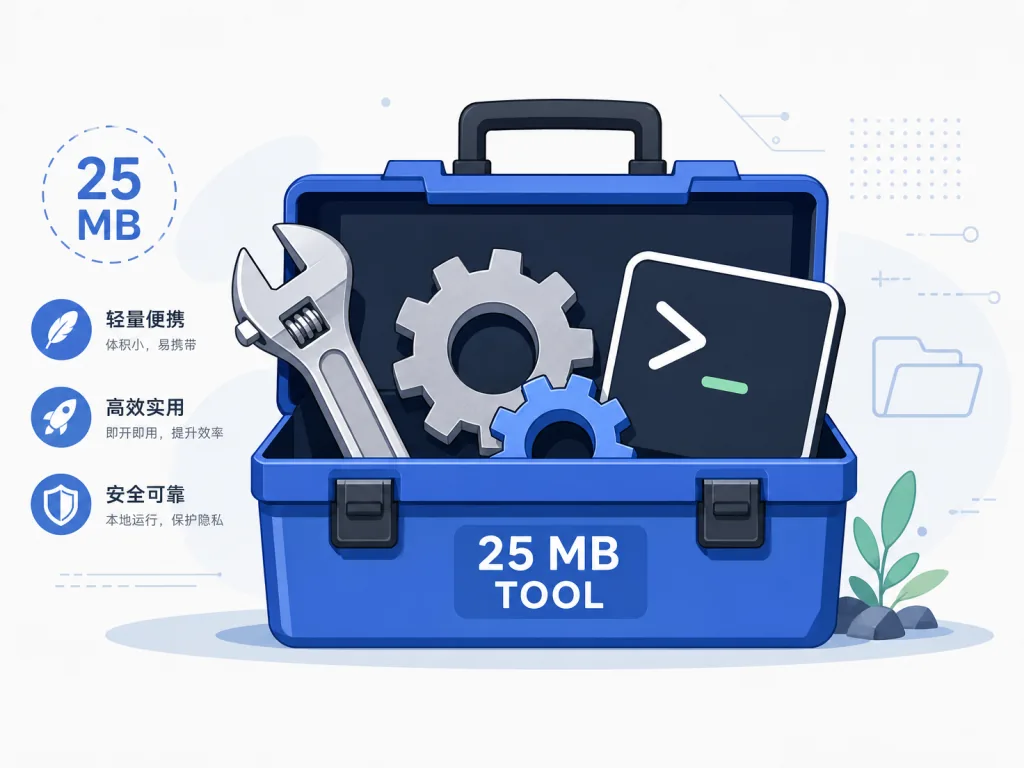
DBX packs 90+ kinds of databases into a 25 MB binary, covering MySQL, PostgreSQL, SQLite, Redis, MongoDB, DuckDB, SQL Server, Dameng and more. It ships as a desktop app, a Docker image and a CLI, has a built-in AI assistant that explains slow SQL, and bundles an MCP Server so a local agent can connect and operate on your data directly.
- Who it's for: DBAs / backend engineers / data analysts who constantly switch between database types; anyone who wants one tool to replace Navicat, DBeaver and TablePlus
- Who it's not for: people who connect to a single database and have no need for a native client
Minimal setup
Install the desktop package, or start the CLI in one line:
docker run -d -p 8090:8090 dbxio/dbx
Then open http://localhost:8090 in your browser and you're in:
open http://localhost:8090
Source: https://github.com/t8y2/dbx
gobackup/gobackup — configure once, back up for years
GoBackup is a backup CLI written in Go that compresses and encrypts databases and files on a schedule, then ships them to cloud storage. Built-in sources include MySQL, PostgreSQL, Redis, MongoDB, SQLite and MSSQL; destinations cover 20+ stores such as S3, Alibaba Cloud OSS, Tencent Cloud COS, Huawei OBS, Backblaze B2, SCP, FTP and MinIO. It includes a scheduling daemon and email / Feishu / Slack / DingTalk notifications, all in a single dependency-free binary. Ruby China's production server ran it continuously for years, at under 0.3 yuan of storage cost per month.
- Who it's for: small and mid-sized application servers, personal VPSes, businesses that need compliant retention
- Who it's not for: large infrastructure that needs PITR, cross-region disaster recovery or TB-level real-time sync
Minimal setup
One-line script install:
curl -sSL https://gobackup.github.io/install | sh
Start a background daemon:
gobackup start
Source: https://github.com/gobackup/gobackup
firecrawl/firecrawl — turn web pages into Markdown LLMs can eat
Firecrawl is a web data API built for AI agents: it turns any URL into clean Markdown, structured JSON, a screenshot or a PDF. It handles rotating proxies, JS rendering and 403 bypasses out of the box, with a P95 latency of 3.4 seconds and coverage of 96% of public web pages. Search, Scrape, Crawl, Batch Scrape and Interact form a complete interface set, and one command hooks it up to any MCP client.
- Who it's for: teams working on RAG, agents, data collection, SEO monitoring or AI summarization
- Who it's not for: lightweight needs that only crawl one or two fixed pages
Minimal setup
Install the Python SDK:
pip install firecrawl-py
Scrape one URL and convert it to Markdown:
from firecrawl import Firecrawl
Firecrawl(api_key="fc-xxx").scrape("https://example.com", formats=["markdown"])
Source: https://github.com/firecrawl/firecrawl

public-apis/public-apis — the community-maintained dictionary of free APIs
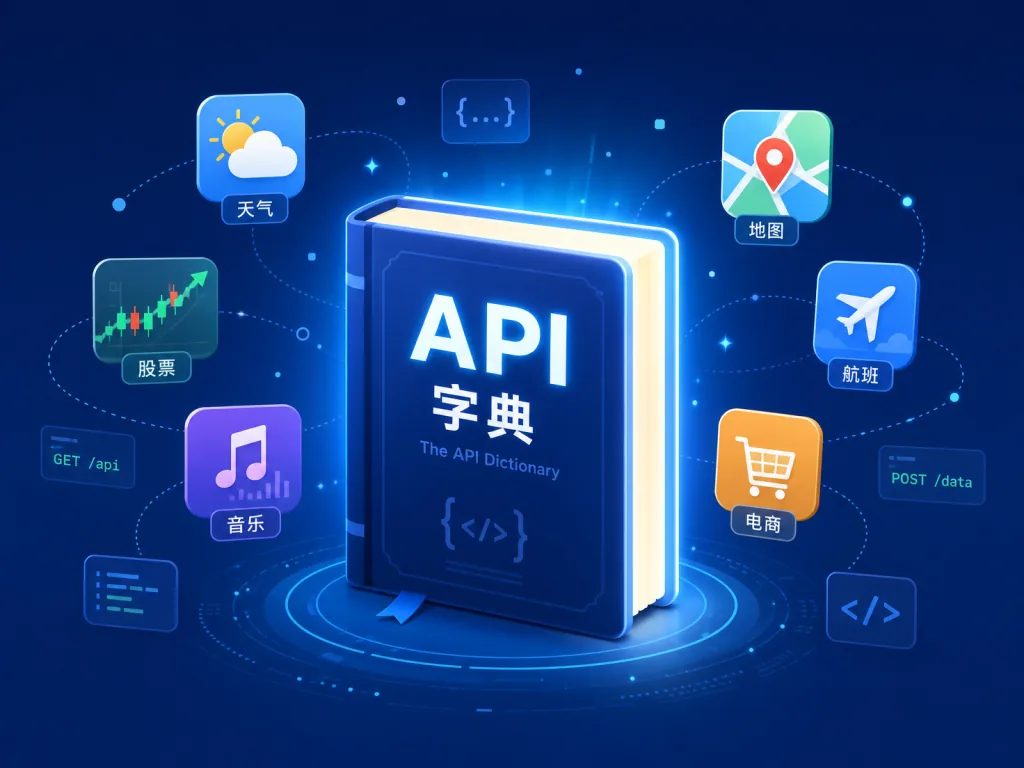
public-apis is a free API directory with 480,000 stars, organized into dozens of categories like animals, weather, finance, music, news and geolocation. Every entry notes whether an API key is required and whether it supports HTTPS, CORS and which auth method it uses. Every day a few — sometimes dozens — of PRs add new endpoints, making it the cheat sheet you flip through while building a side project.
- Who it's for: developers who need a data source for a demo, a thesis project or a personal project
- Who it's not for: production services that need SLAs and enterprise-grade reliability (use a paid API for those)
Minimal setup
Just clone the repo and search locally:
git clone https://github.com/public-apis/public-apis
Or browse the web version by category:
open https://publicapis.dev
Source: https://github.com/public-apis/public-apis
4. Takeaways and what to do next
If you can only install one thing first, start with Supabase — it kills 80% of your backend boilerplate outright. If you're already losing sleep over production databases, GoBackup is a one-time config that lets you coast for years. And if you work on AI apps or data collection, bookmarking Firecrawl and public-apis before you log off is enough.
#AI #LLM #RAG #Supabase #Authentik #Oceanbase #Dbx #Gobackup #Firecrawl #PublicApis