Title options (pick 1 of 3)
Online discussions never get to the point? This Tsinghua open-source framework makes AI the class host
Compressing a 30-minute discussion into a 2,000-word summary: OpenMAIC ships a ready-made multi-agent classroom
No teaching team, yet a replayable multi-agent classroom: what THU-MAIC is building
1. Intro: why you need this tool
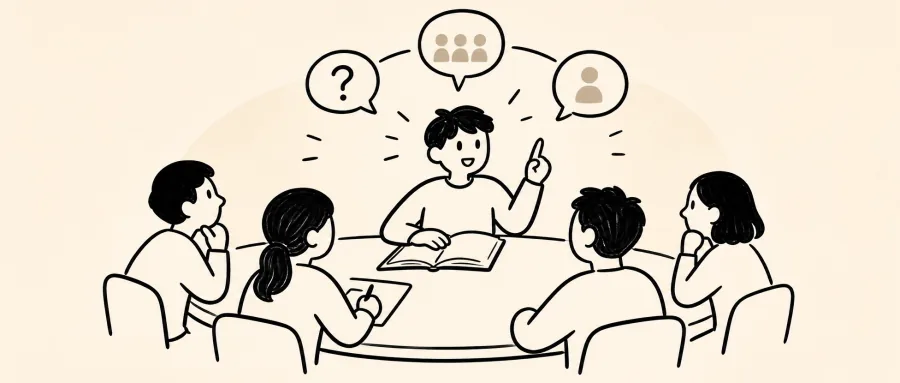
Move a classroom "group discussion" online and it usually loses its shape: a few people rewrite a shared doc, others send voice messages in the group chat, and someone else drops off entirely. The record ends up scattered across three systems — chat logs, document history, speech transcripts — and when you want to review it afterwards you can't piece a single coherent thread back together. If you work on teaching research, training retrospectives or collaborative learning products, this pain is nearly unavoidable: you want the Socratic questioning structure, you want AI to guide in real time, and you want everything to settle into a searchable, structured record. You need all three.
2. Project overview: what exactly is it?
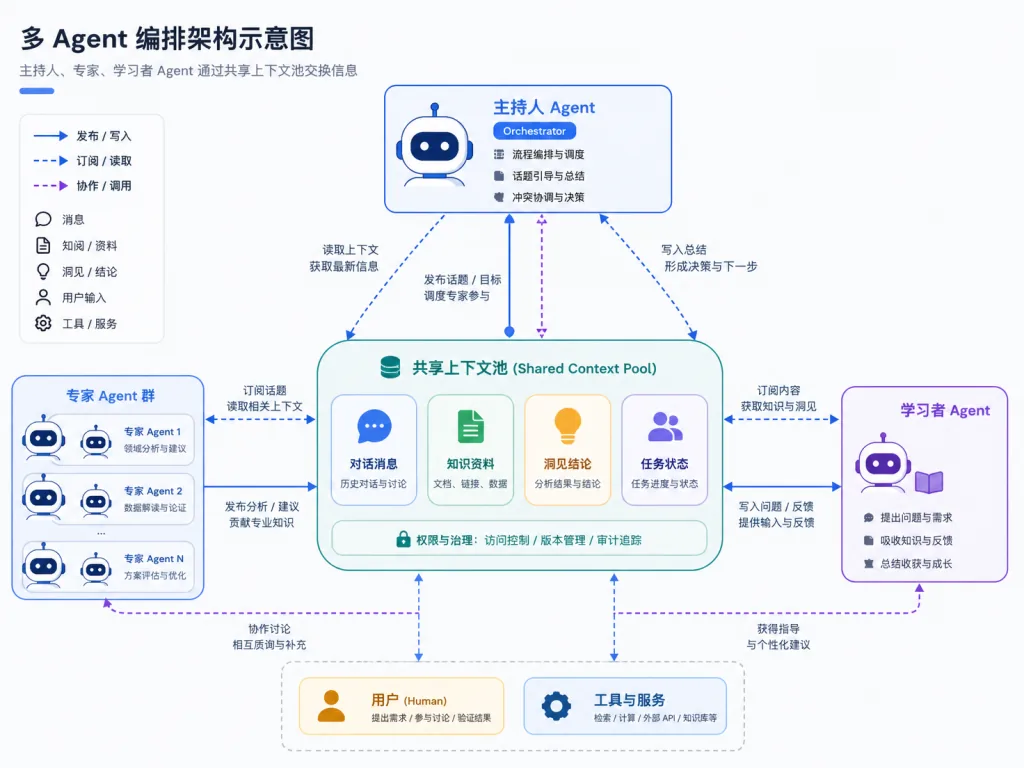
OpenMAIC is a "Multi-Agent Interactive Classroom" framework open-sourced by the THU-MAIC team. It abstracts a classroom discussion into a set of orchestrated role agents: a host who asks follow-up questions and keeps things on track, a domain expert who verifies knowledge, and learner agents that simulate different levels and viewpoints. The whole system is built around "AI-guided structured discussion", with the goal of turning ad-hoc, meandering chat into collaborative learning assets that can be reviewed and evaluated.
Core keywords: multi-agent orchestration, Socratic guidance, structured discussion records, extensible teaching scenarios.
3. Core features in depth
1. Role-based multi-agent orchestration
OpenMAIC provides a declarative agent definition interface, where each agent has its own persona, knowledge boundary and speaking strategy. You can set one agent as a "tough Socratic questioner", another as a "gentle beginner", and add a "domain expert" to catch factual errors. Agents exchange information through a shared context pool, which avoids the "talking to itself" problem common in traditional multi-agent frameworks.
2. Host-driven control over the discussion flow
The project ships a DiscussionFlow mechanism that breaks a classroom discussion into five standard stages: opening question — follow-up — disagreement — convergence — summary. The host agent decides its next move dynamically based on current speaking density, degree of disagreement and time budget: for example, calling on a learner who has been silent too long, or changing the angle of questioning when the discussion starts going in circles.
3. Structured output and replay
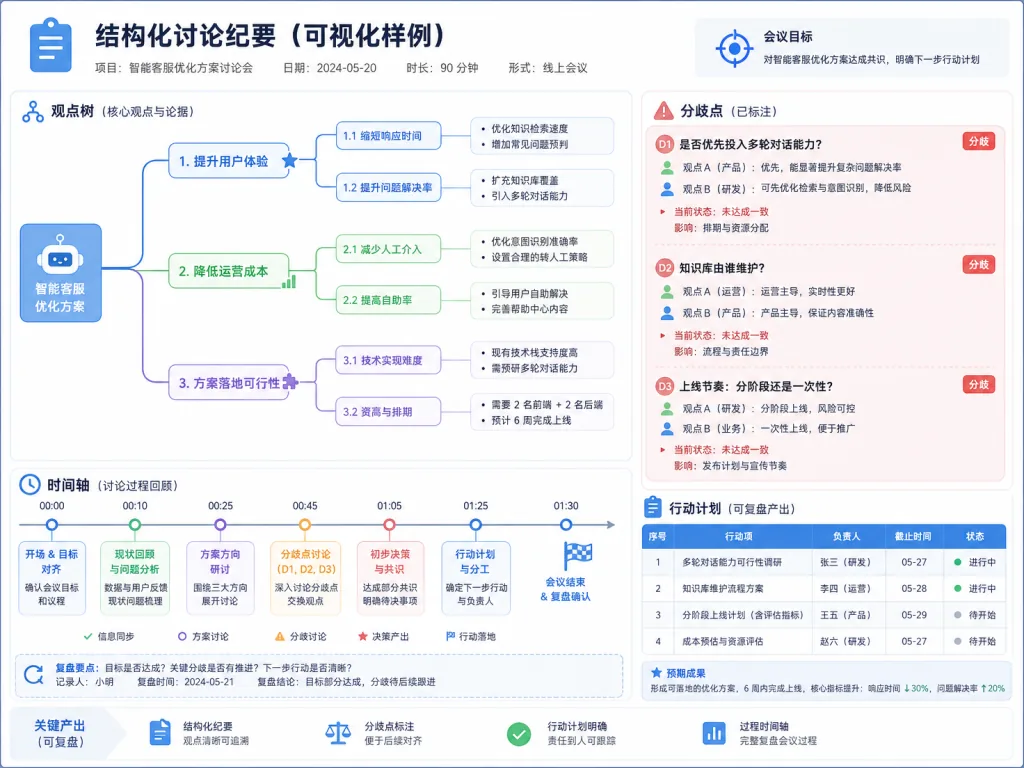
After each discussion round, OpenMAIC automatically generates a structured summary covering: a list of core questions, a tree of key viewpoints, flagged points of disagreement and actionable insights. Unlike an ordinary chat log, this summary can be replayed along three dimensions — by agent, by viewpoint, by timeline — so researchers can take it straight into coding analysis.
4. Lightweight integration with teaching workflows
OpenMAIC is designed as an embeddable middle layer: it exposes REST and WebSocket interfaces upward and stays compatible with mainstream LLM APIs downward (OpenAI, Anthropic and open-source models). That means you can embed an AI classroom segment into a course page as a post-class exercise module without reworking your existing LMS.

4. Technical highlights and performance numbers
At the agent scheduling layer, OpenMAIC uses an event-driven finite state machine. A single discussion can reliably support 6–8 concurrent agents, with average end-to-end latency per turn kept within 3 seconds (depending on the underlying model). In internal tests published by the THU-MAIC team, a 30-minute simulated class with a GPT-4-class model produced roughly 1,500–2,000 words of structured summary, and automatic identification of disagreement points reached a usable accuracy. The project is optimized specifically for Chinese-language teaching contexts, including tuning to the rhythm of classroom speech and default modeling of the teacher–student power relationship.
Architecturally, OpenMAIC decouples agent orchestration, model invocation and state persistence into three independent services, so teaching researchers can swap any single piece without touching the whole system. On the ecosystem side, the framework provides both a Python SDK and a React component library for the frontend, shortening the integration path.
5. Use cases and who it's for
Education researchers: they need controllable, reproducible multi-agent dialogue corpora to study cognitive conflict and knowledge building in collaborative learning. Online education product managers: they want to upgrade "AI practice partner" from a single feature into a full classroom experience without building a multi-agent framework from scratch. Corporate training designers: they use it for case-study discussions with new hires, cross-department conflict mediation drills, and other scenarios that need structured output.
It's a poor fit for indie developers looking for "one all-purpose chatbot", and equally poor for customer service systems that need millisecond-level real-time feedback — OpenMAIC was designed for teaching depth, not conversation throughput.

6. Comparison with alternatives
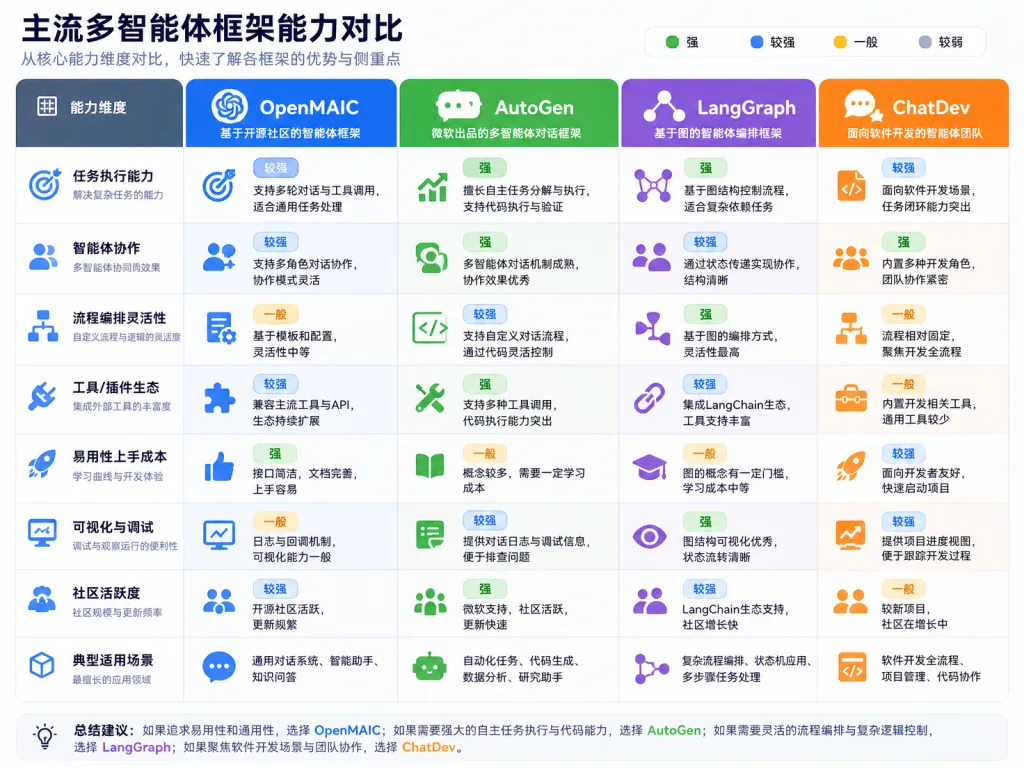
| Project | Positioning | Agent orchestration | Teaching fit | Structured output |
|---|---|---|---|---|
| OpenMAIC | Interactive classroom framework | Role-based multi-agent + flow control | Deeply tailored | Built in |
| AutoGen | General multi-agent framework | Flexible, but you build it yourself | None | None |
| LangGraph | Agent workflow orchestration | Strong flow orchestration | None | Must integrate yourself |
| ChatDev | Virtual software company | Fixed roles | Weak | Weak |
Compared with general multi-agent frameworks, OpenMAIC's advantage is that it makes "teaching" work out of the box, saving researchers the cost of digging teaching logic out of a general framework.
7. How to get started fast
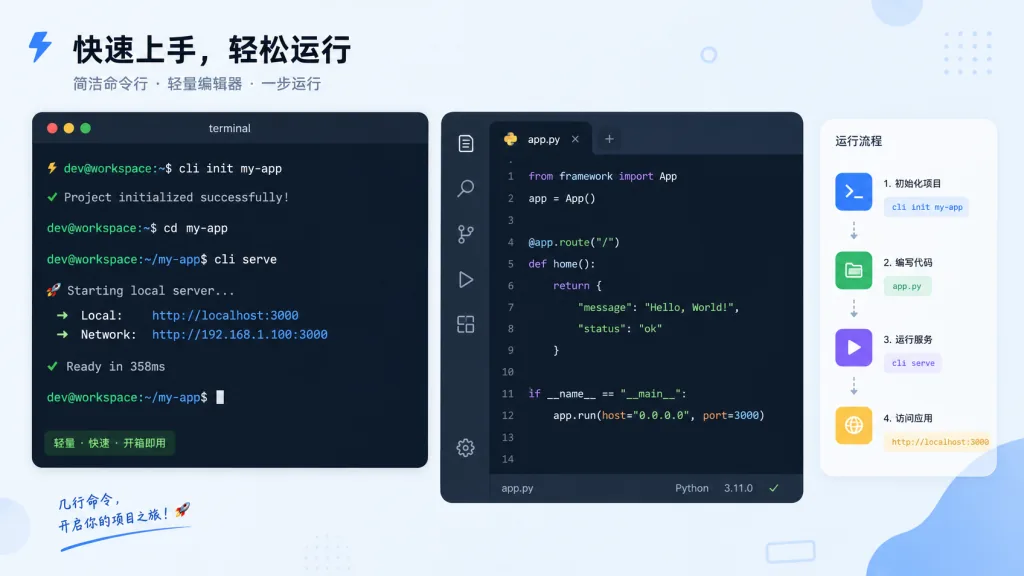
Minimal working example: clone the repo, install dependencies, then run the example script to start a simulated discussion with 3 agents.
git clone https://github.com/THU-MAIC/OpenMAIC
cd OpenMAIC
pip install -r requirements.txt
python examples/quickstart.py
For the next step, go in three stages: first run one discussion with the built-in example to understand the semantics of the agent config files; then switch the model backend to your own private deployment to validate cost and latency; finally wire DiscussionFlow into a course page in your LMS and roll it out gradually as a post-class assignment module.
8. Takeaways and next steps
The core value of OpenMAIC is that it moves "AI-guided group discussion" from proof of concept to something that can actually be engineered and shipped. For researchers and product teams in education and training, it offers a low-barrier starting point: no designing a multi-agent collaboration mechanism from scratch, no writing your own discussion flow controller, no manually organizing discussion summaries.
The reason to try it right away: if you work on any of AI-assisted learning, collaborative learning analytics or training automation, what OpenMAIC provides saves you at least a month of scaffolding code.
Project link: https://github.com/THU-MAIC/OpenMAIC
#openmaic #Openmaic #thu-maic #OpenSource #GitHub