Title options (pick 1)
Five years into writing a WeChat publication, I finally got this 111-star GitHub project: it doesn't teach fancy prose, it teaches you to hold back the tears.
Ten thousand words, not one sentimental line, and readers still cried: this GitHub writing Skill hides emotion inside numbers and objects.
A counter-AI-writing Skill shows up on GitHub: 111 stars, built specifically to cure the sentimentality cancer of AI articles.
Ten thousand words without a single sentimental line, and readers still cried: this 111-star writing method on GitHub takes "no sentimentality" to the extreme
1. Opening: stop hand-cranking this
Five years into writing a WeChat publication, do you ever get this feeling? The material is solid, the experience genuinely moving, but what comes out is flat as tap water.
Open the draft and the problem is obvious — the whole thing runs on "I felt bitter", "in the end we drifted apart", "maybe that's just how life is". Every adjective is shouting, and readers swipe away after two screens.
What stings more: you read a postmortem on a first-prize piece and find that ten thousand words contain not one emotional line, not one comment, and it still made you cry. So where is the gap?
A GitHub project called new-concept-writing takes this apart. It has 111 stars. It doesn't teach you flowery diction, it doesn't teach you structural templates. It does exactly one thing: pull emotion out of adjectives and stuff all of it into numbers, objects, repetition and white space.
2. What the project is actually for
new-concept-writing is not a general-purpose writing tool. It is a "New Concept first-prize writing Skill". A Skill here means a set of writing instructions you feed to an AI, so the AI learns this craft of carrying the most emotion with the fewest words.
Four keywords sum up its core: numbers carry the weight, objects replace psychology, repetition and rupture, zero explanation. The pain point it targets is extremely specific: writers — especially those drafting with AI — can't stop reaching for emotion words, and the harder they push, the cheaper it reads.
The project is light: one GitHub repo, one SKILL.md, and one recommended model, Opus 4.6. It doesn't exist as a tool. It exists as writing discipline.
3. Inside the core techniques
1. Let numbers do the emotional work
The project repeats one principle: don't write emotion with adjectives, write it with numbers.
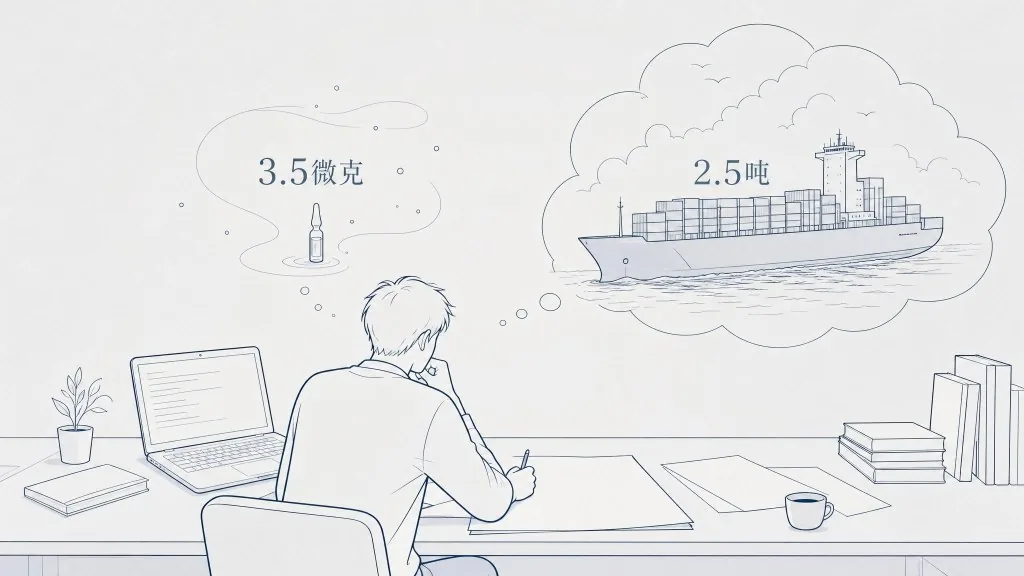
Instead of "I was hesitant", write "I hesitated for three days". Instead of "the gap between us was huge", write "a 150-yuan down jacket, a 150-million-yuan movie". An egg is 3.5 micrograms; fifty million dollars is 2.5 tons. Weight, money, time — the moment these physical units enter the text, readers start converting in their heads, and that conversion is the moment they step inside the story.
That is the secret of numbers carrying weight: they bypass the reader's defenses.
2. Objects instead of psychological description
In conventional writing, missing someone means writing "I think about her every waking moment". This Skill does something else: it puts a concrete object on the table.
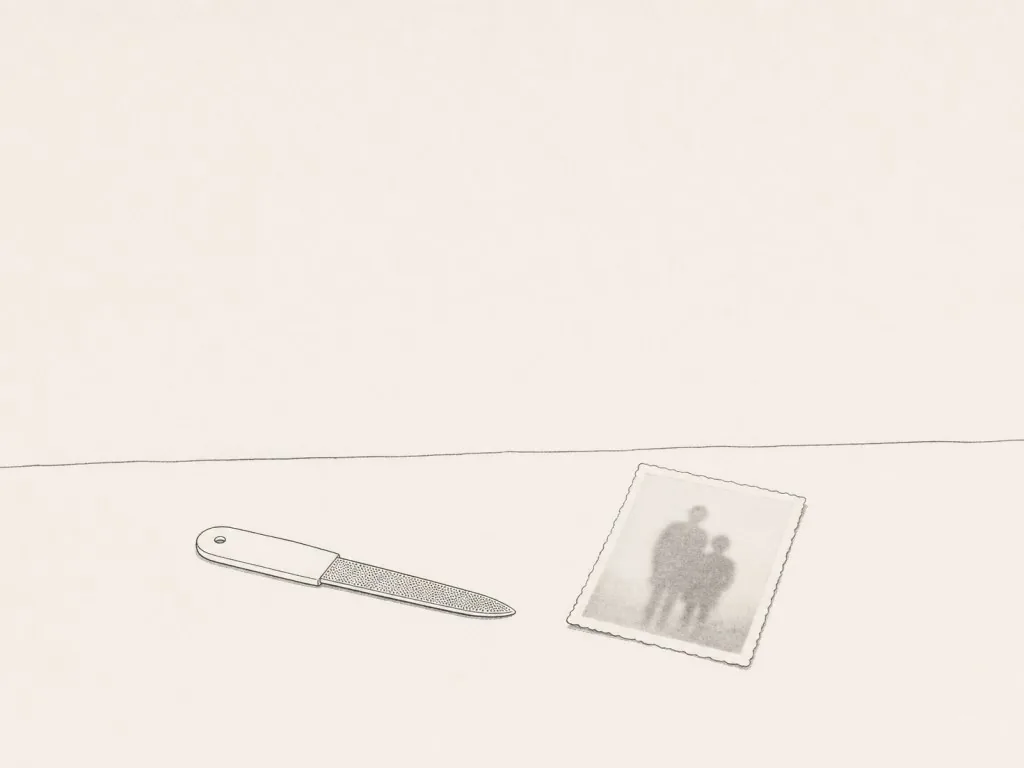
A QQ image saved in 2007, so low-res it's mush, migrated to every new device for nineteen years. An unopened ovulation-induction syringe, refrigerated for eight days, in a box shipped back from Los Angeles. A nail file, two strokes, wrong direction, put back — and the piece ends with "my nails still snag on everything today".
The object doesn't speak for the author; it hands the judgment entirely to the reader. A reader who sees a QQ image migrated again and again will read the weight of nineteen years into it themselves.
3. Repetition, then rupture
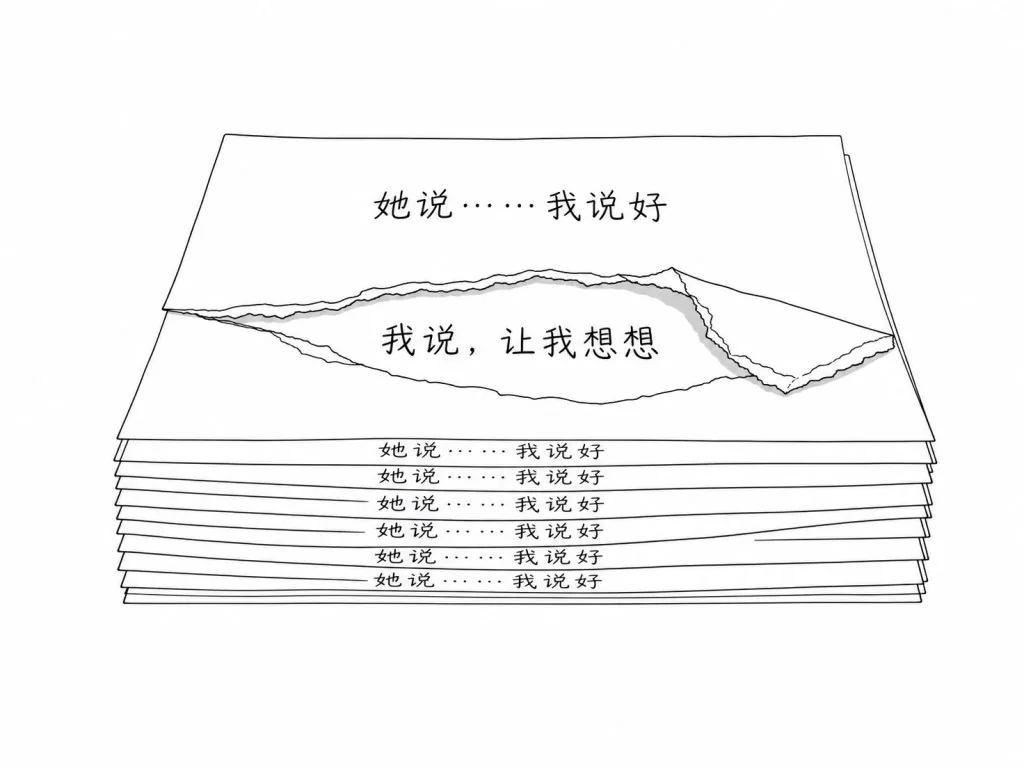
There's a classic case in the project. "She said let's go to a movie, I said okay. She said the bride price, I said okay. She said Tenerife, I said okay…" That "she said… I said okay" structure repeats a dozen times, and the rhythm has already swept the reader along and set up an expectation: this man agrees to everything.
And then — "She said, fifty million, dollars. I said, let me think."
One line breaks it, and every "okay" before it flips. That's the power of structure: build the habit first, then interrupt it. The instant the reader is interrupted, the emotion arrives.
4. Zero explanation, trust the reader
This is the most counterintuitive rule in the whole Skill. It says throughout: don't tell the reader why, don't explain anyone's motives.
"I believed everything she said. But I didn't believe a single word." The two sentences sit together, the author never explains, and the white space leaves readers to work it out. How can someone fully believe and fully disbelieve at the same time? The emotional tension detonates inside that contradiction.
The project also ships a banned list: replace "I felt sad" with "I put my phone on the nightstand, screen down"; replace "the gap between us was too big" with "150 yuan. 150 million."; delete "maybe that's just how life is" outright — don't write it.
4. Technical highlights and performance data
The Skill isn't software, but it has a few design choices worth calling out:
Craft governs technique: the project opens by setting the tone — "while writing, your head should hold the reader's current state". Every technique serves four questions: what is the reader judging right now? What are they expecting? What information are they missing? How high is the tension? Anchoring on the reader's state is more universal than any template.
Real corpus driven: none of the examples are made up. They come from a postmortem on a real first-prize article. That makes the Skill a paradigm you can compare against, not abstract theory.
Strict model matching: the author states plainly that "Opus 4.6 is the only recommendation". The reasoning: "restraint requires judgment, and small models can't do it." That honesty matters more than any benchmark — it tells you when to use which tool.
5. Where it fits, and who it's for
True emotional stories: in the project's own words, "true emotional stories, best combined with voice input". It is not for fiction, marketing copy, or technical blogs.
Three kinds of users fit best: first, WeChat publication writers, especially personal-essay and profile accounts; second, nonfiction writers who have to work through interview material; third, people drafting with AI who keep getting that "AI flavor" in the output.
Poor fits: operators who need to mass-produce SEO posts fast, deep reports that need data argumentation, and commentary that needs logical inference.
6. How it compares
| Dimension | Traditional writing courses | Generic AI prompts | new-concept-writing |
|---|---|---|---|
| Teaching method | Abstract theory | Template fill-in | Craft + paradigm + banned list |
| Core goal | Ornate prose | Output efficiency | Emotional restraint |
| Model requirement | None | Works with any | Explicitly Opus 4.6 |
| Suitable genres | General | General | True emotional stories |
| Anti-AI-flavor | None | Makes it worse | Built to fight it |
Most writing Skills on the market teach you "how to write better". This one teaches you "how to hold back". That kind of reverse teaching is rare in content creation.
7. How to start fast
Step one: read SKILL.md. Go to https://github.com/orange2ai/new-concept-writing and read through both parts — the craft and the techniques.
Step two: feed it to an AI. Copy this instruction and send it:
Please read SKILL.md at https://github.com/orange2ai/new-concept-writing, learn this writing method, then use it to write me a story about [xxx].
Step three: pair it with Opus 4.6. The author recommends running Opus 4.6 directly in Cola, because small models can't sustain the judgment that restraint requires.
Going further: first use this Skill to rewrite one of your own old pieces, and watch the density of the text change once the adjectives are swapped for objects.

8. Takeaways
new-concept-writing is not a tool. It is a writing discipline. It tells every writer the same thing: emotion isn't shouted, it's hidden. Hidden in 3.5 micrograms, hidden in a nail file sanded the wrong way, hidden in a blurry nineteen-year-old image nobody could bring themselves to delete.
If you're writing a true story and you're stuck on "how do I make this moving", go read that SKILL.md, then hold back — delete every "I felt", and let the numbers, objects and white space speak for you.
Repo: https://github.com/orange2ai/new-concept-writing
Recommended model: Opus 4.6 (available directly in Cola)
Restraint is the hardest technique to learn, and the most valuable one.
#new-concept-writing #NewConceptWriting #orange2ai #OpenSource #GitHub