1. The pain point almost every content creator has hit
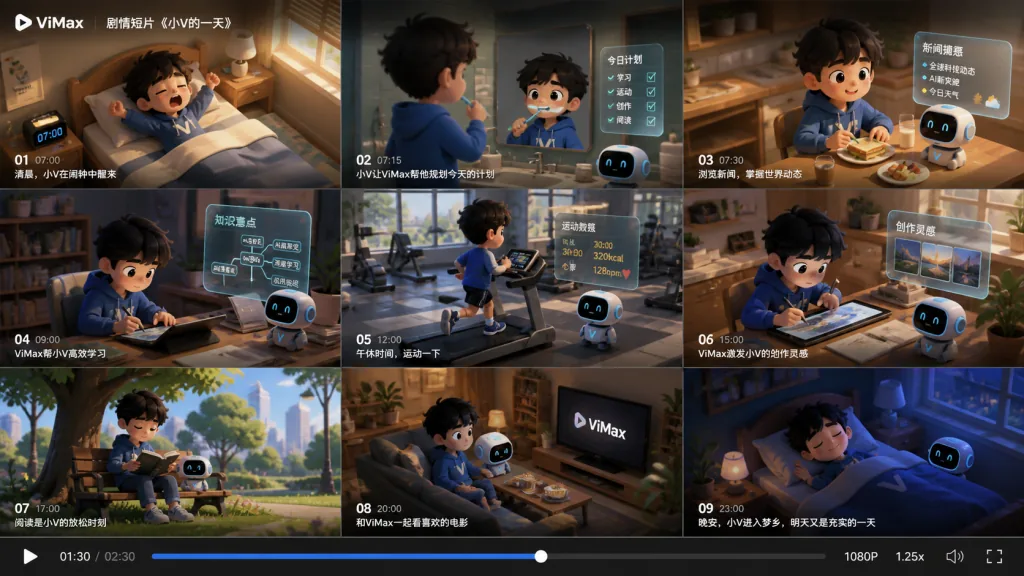
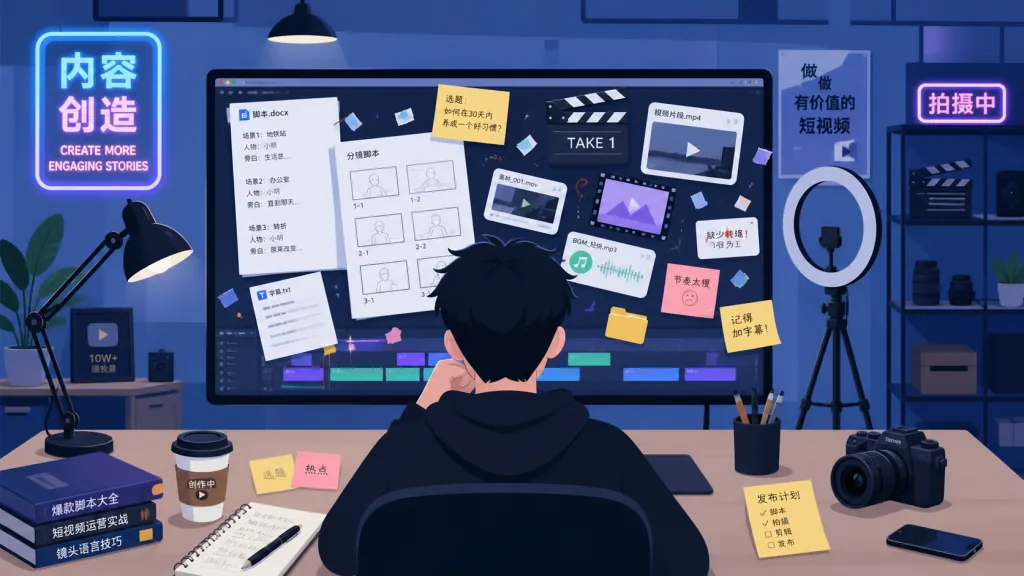
Making a 30-second short traditionally means writing a script, drawing a storyboard, hunting reference images, re-rolling generation over and over, cutting the footage, and syncing lips — the prep alone is a slog. The spread of AI video tools didn't improve things; it got messier. Models like Sora and Kling only spit out a few seconds of fragments, the lead character's face changes between shots, and narrative structure simply doesn't exist. ViMax — 11.8K stars on GitHub (HKUDS/ViMax) — is built squarely for this pain. It positions itself as a four-in-one agent of "director + screenwriter + producer + video generator," with the goal of turning one sentence into a complete video.
2. In one sentence: what is this project
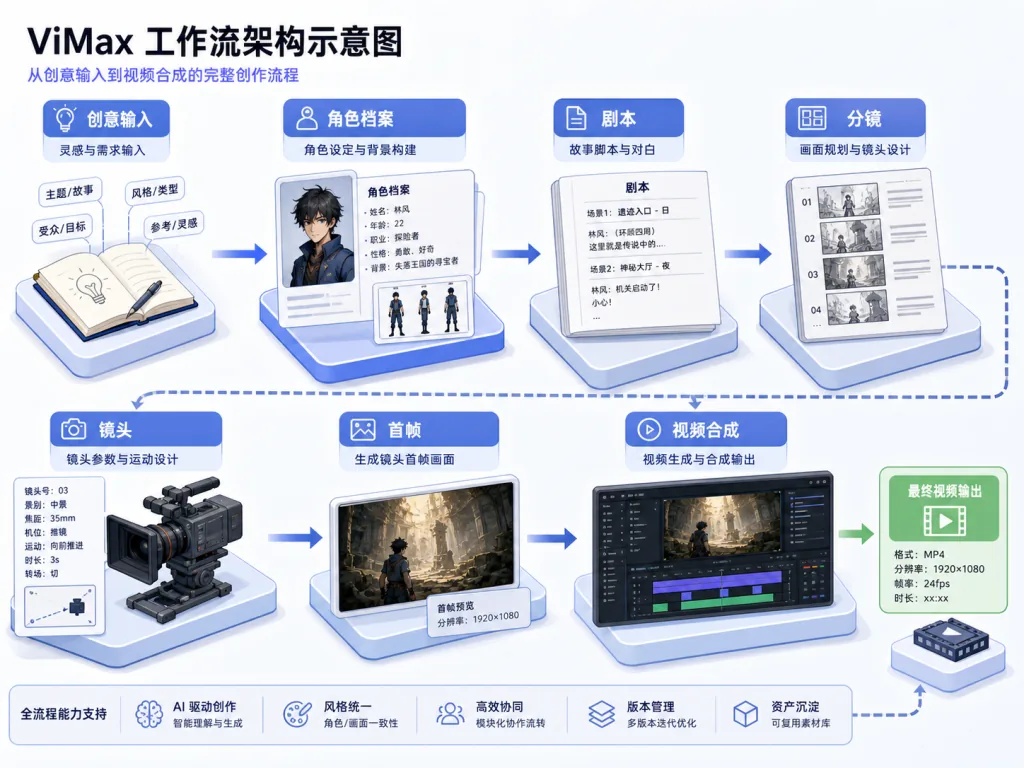
ViMax is an Agentic Video Generation framework open-sourced by the HKU Data Intelligence Lab (HKUDS). It folds script writing, storyboard design, character consistency, first-frame generation and video synthesis into a single orchestrated workflow, supporting core scenarios like Idea2Video, Script2Video, Novel2Video and AutoCameo. The current release, v1.2.0, ships a Web UI plus an Agent Loop + TUI interaction mode.
3. A deep dive into the core features
1. Idea2Video: one sentence into a full video
Give it a creative concept (for example, "if a cat and a dog were best friends, what happens when a new cat shows up") and ViMax breaks it down on its own into story structure, character profiles, script, storyboard and shot list, then outputs the finished film. The script side is driven by LLMs such as Gemini 2.5 Flash Lite and the GPT series; the visual side is handled by image and video models like NanoBanana, Veo and Seedance.
2. Script2Video: controllable multi-shot films
Feed it a finished script and it slices it by scene, schedules shot order and reuses character reference images so appearances don't drift across shots. That matters especially for series, promos and ads.
3. Novel2Video: adapt a long novel into episodes
This was the headline feature added before v1.2.0. Through "narrative compression + character tracking + scene planning," it compresses a novel of tens of thousands of words into a shootable episodic script, and keeps the lead character's face identical across dozens of scenes.
4. AutoCameo: put a real person or pet in the lead
Upload one reference photo (a face or a pet both work) and ViMax locks that face as the visual anchor for the lead in its character-consistency pipeline, embedding it into the story automatically. Making your own cat guest-star as a short-drama lead is no longer technically hard.
4. Technical highlights and performance
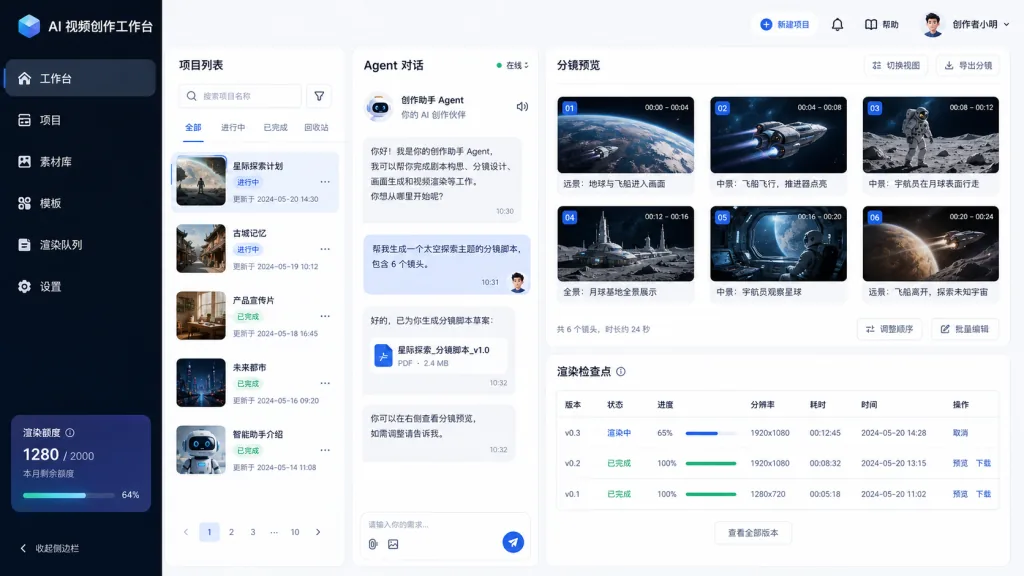
ViMax's core highlight is an "orchestrable agentic workflow" — not a single model, but multiple generators chained together. It builds in parallel generation: compatible shots and assets run concurrently, sharply cutting production time for long multi-shot videos; reference images, first frames and shot continuity control maintain consistency across scenes. The v1.2.0 Web UI supports named projects, Agent Loop conversations, artifact preview, render checkpoints, file upload and dark mode, and is compatible with multiple model providers including Seedance 2.0 Fast, GPT Image 2, OpenRouter and Google Omni. On ecosystem compatibility it relies on uv for dependency management (Python 3.12) and Node.js 18+ on the web side, so the deployment bar is friendly.
5. Who it's for
Good fit: short-video teams in self-media that want to mass-produce story accounts with AI; indie game developers making CG short demos; film studios running proof of concept; web-novel authors turning novels into short-drama demos; e-commerce teams making product story shorts; educational creators staging lesson scenes. Not a fit: traditional studios chasing cinema-grade CG precision (it is still prototype-stage and needs multi-model assembly), and absolute beginners unwilling to configure API keys (basic environment setup is still required).
6. How it compares
| Dimension | ViMax | Single video generation model (e.g. Sora/Kling) | Traditional editing pipeline (PR + designer) |
|---|---|---|---|
| Length | Multi-shot videos at the minute scale | Usually a few seconds | Any |
| Character consistency | Locked across scenes | Drifts easily | Fully controllable |
| Narrative structure | Script and storyboard generated automatically | None | Written by hand |
| Automation | One sentence to finished film | Generates assets only | Fully manual |
| Entry barrier | Medium (needs API config) | Low | High |
ViMax's essential difference: it doesn't compete with model generators, it acts as the director and orchestrates many models.
7. How to get started quickly
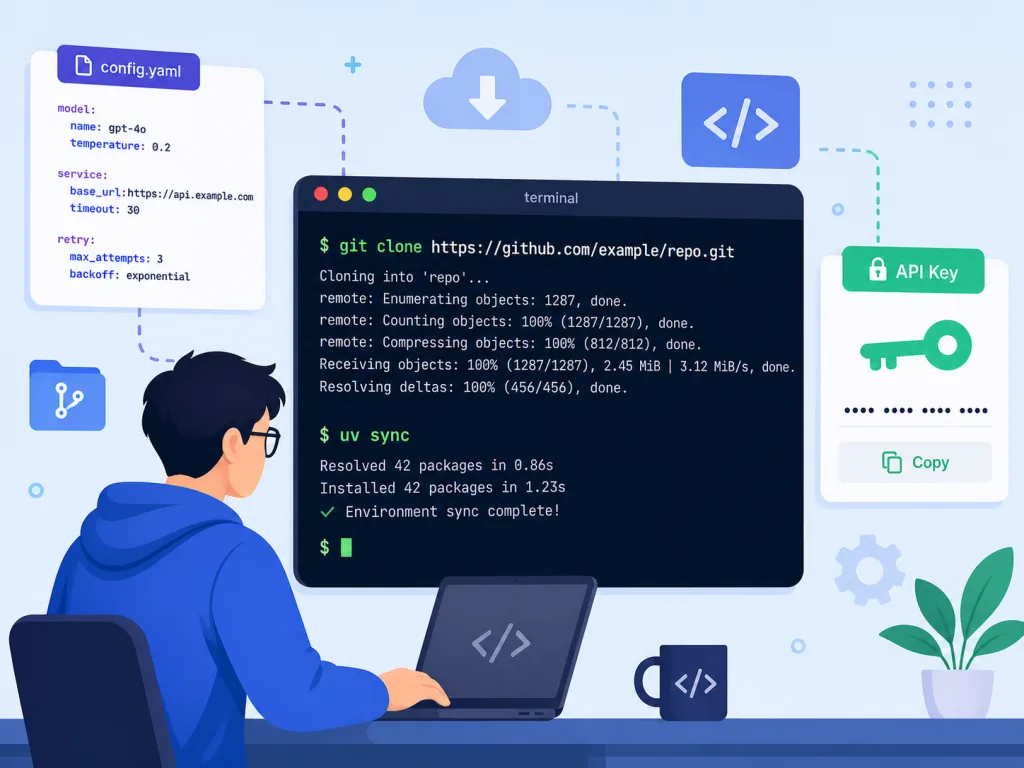
Clone the repo and install dependencies with uv: git clone https://github.com/HKUDS/ViMax.git && cd ViMax && uv sync. Then copy configs/agent.example.yaml to configs/agent.local.yaml and fill in the model, base_url and api_key for the LLM, image generator and video generator. Command-line users can just run vimax tui to enter the TUI; if you want a GUI, run cd web && npm install && npm run dev and open http://127.0.0.1:4173 in the browser to see the v1.2.0 web workbench. Minimal example for beginners: edit main_idea2video.py with your idea and style, run it, and wait for the storyboard and finished video. For production, manage the three API keys separately with the VIMAX_LLM_API_KEY, VIMAX_IMAGE_API_KEY and VIMAX_VIDEO_API_KEY environment variables.
8. Takeaways and next steps
ViMax pushes "film from one sentence" from concept to an executable engineering level, covering the Idea/Script/Novel entry points and the AutoCameo live-action mode. For teams wanting to test AI story accounts, concept shorts or novel adaptations, it is worth evaluating as part of the main toolchain. Run the minimal Idea2Video example first, then move to Script2Video for finer shot control, and bring in the Web UI for multi-person collaboration when needed.
Project: https://github.com/HKUDS/ViMax
Technical report: https://arxiv.org/abs/2606.07649
Demo video: https://www.youtube.com/@AI-Creator-is-here
The onboarding cost is one afternoon, and the resulting films are long enough to carry the key KPI of a story account.